How to Plan a Superhero Group Costume Without Matching Everything
A superhero group costume looks connected when everyone shares a visual idea. It does not require identical suits, identical spending, or a rigid cast list. The useful question is: what will make a photo of these people feel like one team?
Start with the group's actual plans. A house party, an outdoor photo session, and a convention each ask different things of an outfit. Agree on the event first, then choose the creative rule that brings the costumes together.
Pick one rule everyone can describe
Choose a shared palette, a common setting, or a repeated accessory shape. “Red, blue, and black” is a palette. “Off-duty heroes at a neighborhood meetup” is a setting. “Everyone has one visible piece of imaginary technology” is an accessory rule. One strong rule is usually easier to follow than five small ones.
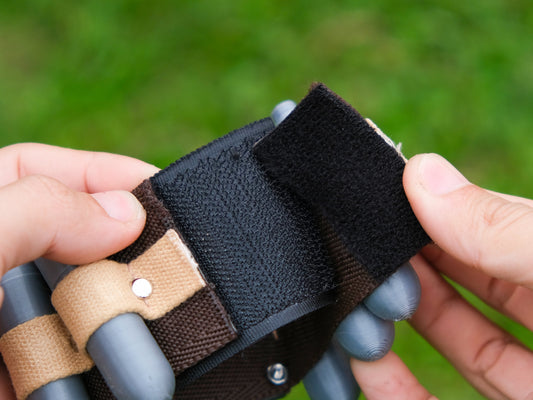
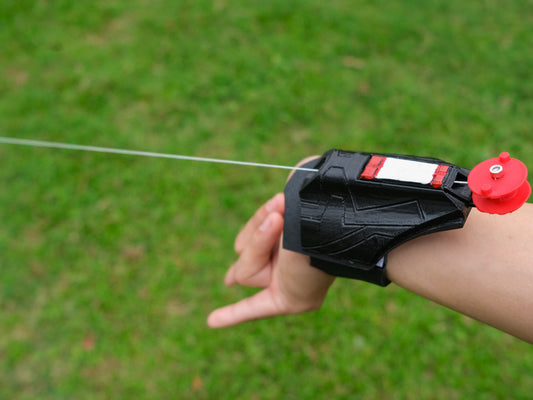
The rule should leave room for interpretation. One person might wear a detailed wrist prop, another a chest-light accessory, and another an outfit built around a jacket. The connection comes from the agreement you made, not from pretending the pieces belong to the same fictional universe.
Choose roles instead of assigning expensive shopping lists
Ask each person which part of the idea they enjoy: a bright outfit, a mechanical detail, a dramatic entrance, or a low-key version. Let their role grow from that preference. Someone who wants a simple costume should not be given the most elaborate build because their hair resembles a character.
Set a personal spending ceiling privately or as a range. Each person can then choose clothes and accessories within it. Avoid making one member's purchase a requirement for everyone else. If a specific item is unavailable, the shared visual rule should still work.

Use a one-page coordination sheet
| Decision | Example | Why it helps |
|---|---|---|
| Shared element | Dark base with one bright accent | Connects different outfits |
| Individual focal point | Wrist prop, chest detail, or jacket | Gives each person a role |
| Photo time | Before entering the party | Avoids searching for everyone later |
| Fallback | Base outfit without handheld extras | Keeps the team recognizable if plans change |
Share reference images to discuss color and shape, but label what you are borrowing from each one. “The red sleeve” is more useful than “make it like this.” Nobody should have to infer a complete costume from a crowded mood board.
Rehearse the group photo as a group
Send ordinary outfit photos in advance. Place them beside each other and look for accidental clashes or one person disappearing into a very dark silhouette. A repeated accent can connect the group without a full redesign. Keep the most detailed props visible rather than hidden behind another person's shoulder.
Plan three images: a relaxed group shot, a coordinated moment, and individual portraits. Agree on who operates the camera and where it will sit. If the group includes someone who does not want to be filmed, build the plan around that preference from the beginning.
Make the entrance simple
A short shared introduction can explain an original team better than a complicated performance. Give the group a name, a setting, or a one-line premise. Avoid relying on synchronized actions that require everyone to arrive at exactly the same moment.
For any launching prop, keep the photo plan static and follow the venue's rules. Looking like a team does not require a demonstration. A clear arrangement of colors and details does most of the visual work.
Compare wrist prop designs and the 5in1 arc reactor as different focal points, then choose only the pieces that fit each person's role. For a more structured performance, use the 60-second stage routine as a separate activity.