Plan a 60-Second Superhero Costume Contest Routine
A costume contest routine becomes easier to follow when the audience knows where to look. Sixty seconds is enough for an introduction, one clear moment, and an exit. It is usually not enough for a complicated plot, several prop changes, and an explanation of every reference.
The routine below is a planning template, not a rule for every contest. Read the organizer's time limit, audio requirements, stage layout, and prop policy first. A casual costume parade and a craftsmanship competition may judge very different things.
Choose one thing the audience should remember
Finish this sentence: “When I leave the stage, people should remember…” The answer could be a silhouette, a mechanical wrist detail, or a chest-light reveal. Pick one. Everything else in the routine should give that moment room to happen.
If the key detail is small, ask whether the stage has a screen or a close-up camera. A wrist prop that reads well on a phone may be difficult to see from the back of a hall. Change the routine to show the whole character instead of trying to force a tiny detail to carry the performance.
Build a cue sheet before choosing music
| Time | Action | Audience information |
|---|---|---|
| 0–10 seconds | Enter and settle on the mark | Who the character is |
| 10–25 seconds | Notice an imaginary problem | What the character wants |
| 25–40 seconds | Show one costume or prop detail | The main visual payoff |
| 40–50 seconds | Hold a readable finishing position | Time to see the costume |
| 50–60 seconds | Acknowledge the audience and exit | A clear ending |
These timings include pauses. A pause is useful because it lets the audience catch up. If every second contains a new gesture, the most interesting part can disappear inside the movement.

Rehearse a static prop reveal
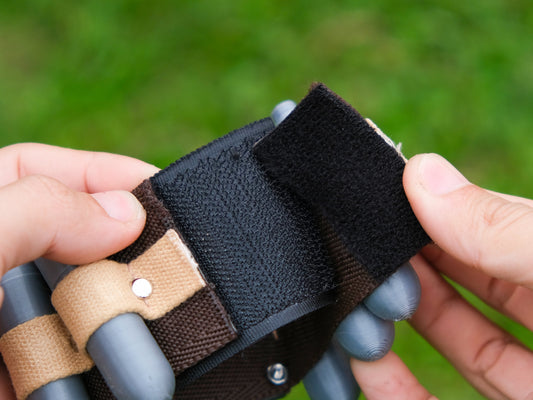
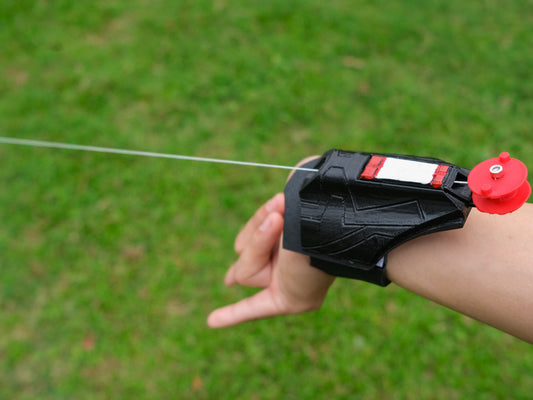
For a web shooter look, turn your torso so the wrist detail becomes visible while keeping the action within a comfortable range. The routine does not need to launch anything. For an arc reactor look, plan a chest-facing moment and a light state that can be repeated reliably in your own setup.
Try the reveal under ordinary room lighting first. If it only works in darkness, decide whether the actual stage can support it. Do not build the entire routine around lighting you do not control. A strong gesture or change in posture can give the scene its payoff even if a light looks less dramatic than expected.
Prepare for the cue that does not happen
Practice once without music. Then practice with the main reveal omitted. If both versions still have a beginning and an ending, the routine has a useful fallback. You can continue instead of stopping to explain a technical issue.
Check the event's audio rules before submitting a track. Use audio you are permitted to use, and keep a simple written cue sheet. The person running the stage should not have to guess which sound belongs to which action.
Use one rehearsal recording to make decisions
Place a camera at an audience-like distance and record the complete routine. Watch it without sound. Can you tell when the main moment happens? Is the finish visibly different from the middle? Does the exit look intentional?
Make one or two changes based on that recording, then rehearse the same version. Constantly adding new moves can make the routine less dependable. A confident performance often comes from knowing exactly what happens next.
For a wrist-focused costume, start with the web shooter design guide. For a small narrative you can film instead of perform live, try the five-shot superhero storyboard.