Mask-Free Superhero Cosplay: Make the Character Read Clearly
You can make a superhero-inspired costume readable while keeping your face uncovered. A face covering is only one part of a character's visual language. Color relationships, proportions, and a distinctive accessory can communicate the idea while leaving room for conversation, glasses, and your own expressions.
Start by deciding how close you want to stay to a reference. You might be portraying a character between missions, inventing your own hero, or building an outfit that simply suggests a comic-book world. Naming that goal prevents you from measuring a relaxed interpretation against a full screen replica.
Replace the mask with a stronger visual hierarchy
Choose the first, second, and third things someone should notice. The first might be a red-and-blue color block. The second might be a recognizable jacket shape. The third might be a wrist device. When all three point in the same direction, the missing mask does not have to become the center of the conversation.
Look at the outfit from several feet away. If every element has equal visual weight, simplify one of them. A quiet background color can make a small bright accessory more readable than adding another large graphic.
Keep your face part of the character
An uncovered face lets expression carry the scene. A curious look suits a workshop character examining an unfamiliar device. A slightly tired expression can sell an off-duty hero. You can tell a story without introducing elaborate makeup or changing the features that make you recognizable.
If you wear glasses, work them into the interpretation. Choose a version of the character who would plausibly be studying, repairing equipment, or taking a break. The goal is an outfit that works with how you actually move and interact.

Try three readable approaches
- The off-duty hero: everyday clothes in a deliberate palette, with one visible wrist detail and an ordinary bag.
- The workshop inventor: a simple outer layer and a chest-light focal point, presented as a character inspecting their own equipment.
- The original neighborhood hero: a personal emblem or color relationship, comfortable clothes, and one piece of fictional technology.
These are storytelling directions, not complete shopping lists. Begin with clothes you already like wearing. A prop should clarify the idea rather than require you to rebuild the entire outfit around an unfamiliar fit.
Check the accessory in conversation mode
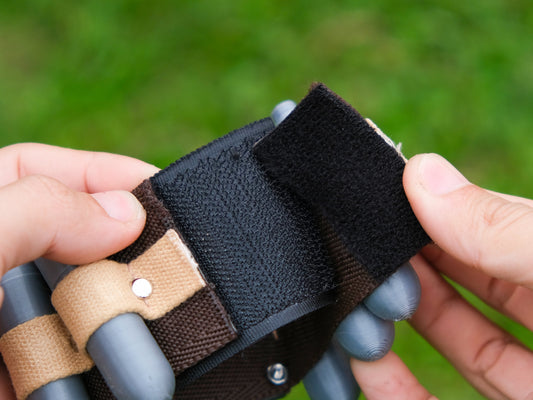
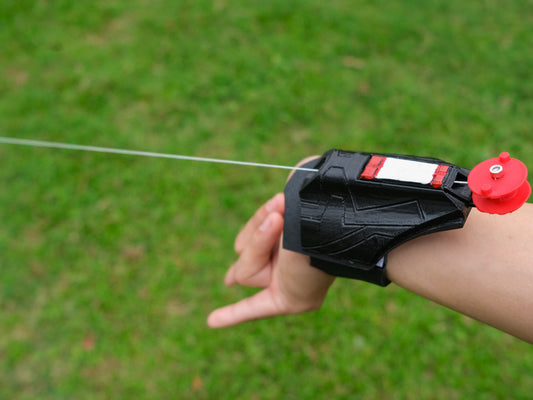
Stand naturally and talk to someone for a few minutes. Notice where your hands go and whether you keep adjusting the outfit. If you are using a wrist prop, check that ordinary gestures remain comfortable. If you are using a chest detail, check that your outer layer does not constantly hide it.
Take a relaxed photograph at normal distance. This tells you whether the costume reads during real interactions, which is different from a carefully arranged portrait. You can still take dramatic photos later; the everyday version should feel complete too.
Give the outfit a one-line introduction
A short explanation helps when your interpretation is intentionally loose: “This is my off-duty hero outfit,” or “I made up a neighborhood inventor.” You do not need to apologize for changing a reference. Explain the creative choice and let people connect with it.
For group events, share that sentence with your friends before choosing a common theme. An original mask-free character can fit neatly into a team if the colors or setting connect.
Explore wearable wrist props or the 5in1 arc reactor as possible focal details. If your main challenge is coordinating several different interpretations, use the group costume planning guide to agree on a shared visual rule.