How to Film an Honest Cosplay Prop Unboxing
A useful cosplay prop unboxing lets viewers understand what arrived before you tell them what you think about it. The strongest version distinguishes package contents, visible details, and first impressions. It does not turn a few minutes with an item into a long-term performance verdict.
Prepare a clean surface, a stable camera, and the order details for your own reference. Keep shipping labels, addresses, order numbers, and private messages outside the frame. You can document the experience without publishing the paperwork.
State exactly what the video covers
Name the selected product and option, then explain that you are opening the package and looking at its contents. If you bought it yourself, say so. If it was provided or connected to a commercial arrangement, describe that relationship clearly rather than presenting the video as an unrelated customer's spontaneous reaction.
Do not promise a full review unless you plan to do the necessary evaluation. A good first-look video is valuable on its own because it answers concrete questions about what the buyer can see.
Keep the opening understandable
Record the package before removing the contents, then show each item as it comes out. You can edit pauses, but avoid rearranging the contents in a way that implies accessories were included when they were not. If a stand or backdrop is yours, identify it as part of your filming setup.
Lay the pieces in separate spaces so small parts do not disappear behind the main object. Compare the visible contents with the exact selected listing or packing information. If something is unclear, label it as a question to confirm rather than a missing feature you have already established.

Use a three-view detail sequence
- Overall view: show the complete object and its proportions.
- Close view: show a detail such as a printed surface, face pattern, or strap.
- Underside view: show the part normally hidden in promotional photos, where handling permits.
Hold the object still briefly in each view. Constant movement can hide the detail you mean to show. Include a ruler in a separate frame if size is relevant, making clear what dimension you measured and where the endpoints are.
Separate observation from interpretation
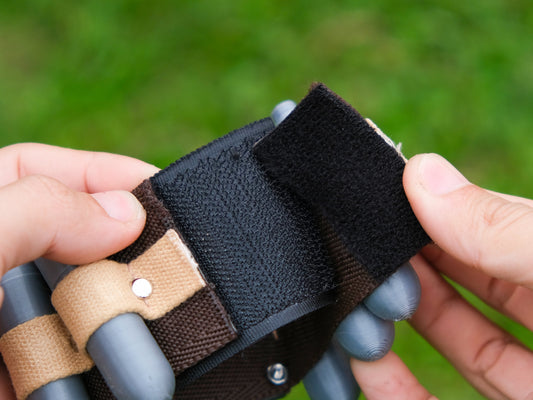
“The shell has visible layer lines” is an observation. “This must be weak” is a conclusion that a photograph alone does not support. “The strap uses hook-and-loop fastening” describes what you see. “It fits everybody” makes a claim you have not demonstrated.
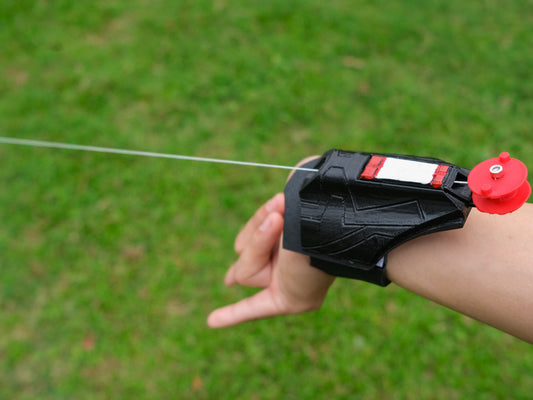
For a web shooter, an unboxing also does not establish range, target compatibility, or the configuration supplied to every customer. For an LED prop, switching it on briefly does not establish runtime. Keep those topics for a separate, clearly described test if you later carry one out.
Finish with an honest question list
Give viewers the questions you still need answered: which parts are intended to move, how the item should be fitted, or what the supplied instructions require. Contact the seller for model-specific guidance before forcing an unfamiliar mechanism.
A useful closing statement might be: “The package and visible finish are shown here; I have not yet evaluated a full event day.” That tells the audience how much weight to place on your impressions.
Read the guide to digital files, kits, and finished props before ordering, or use the 360-degree video plan when you want a more complete visual record of an item you already own.