Host a Cosplay Prop Show-and-Tell with Friends
A cosplay prop show-and-tell gives friends a reason to share the stories behind their favorite pieces. Nobody needs a complete costume or a polished presentation. A small object, a few photos, and a short explanation can be enough to start an interesting conversation.
Keep the gathering focused on participation rather than ranking collections. Someone bringing their first accessory should have as much room to speak as someone who has spent years making elaborate costumes.
Give the invitation a clear shape
Ask each person to bring one piece they can transport comfortably, or a photograph if bringing the object is impractical. Suggest a three-minute story: what the piece is, why they chose it, and one thing they learned from using or making it.
Explain the space and any handling limitations in advance. If the gathering is in a shared venue, check its rules before inviting props. Keep any launching devices inactive; the evening is about the object and its story, not a performance test.
Arrange a display table with room between pieces
Provide a clean surface and let each owner place their own item. Keep drinks and food on another table. Give each piece enough space that nobody has to reach over another object to point at a detail.
Use small cards for a name or a question the owner wants to discuss. A card might say “How would you display this?” or “Which outfit color would suit it?” That turns the display into an invitation to talk rather than a silent lineup.

Use prompts that work for different experience levels
- What first made you interested in this piece?
- Which detail do you notice that other people often miss?
- What changed between your original plan and the finished outfit?
- Where would you like to use or display it next?
- What would you tell someone starting a similar project?
A bought item has a story too: choosing the version, building an outfit around it, or discovering how it reads on camera. Avoid assuming that a piece matters only if the owner manufactured it from scratch.
Let the owner set the handling rule
Ask each person to choose “look only,” “ask first,” or “owner demonstrates.” Make the choice visible or announce it before the discussion. A casual invitation to view a prop does not mean everyone may pick it up.
If handling is allowed, the owner should show where to support it and which parts to avoid. Keep small components with the appropriate piece. A chest-light accessory can be shown briefly according to its instructions without becoming the room's lighting for the entire evening.
Plan one optional shared activity
After the short stories, invite everyone to invent a fictional team that would use the displayed objects. Give the team a purpose and assign each prop a narrative role. The activity can be playful without requiring agreement about different fictional universes.
Another option is a tabletop group photograph. Ask each owner before moving their piece, agree on where the image may be posted, and keep private labels or documents outside the frame. A photograph of the objects can be a good memory even for guests who do not want to appear on camera.
End with a useful idea for each person
Ask everyone to name one thing they want to try next: a better display support, a short video, a clearer collection photo, or a new costume combination. There is no need to turn those ideas into deadlines. The gathering has done its job if people leave with renewed interest and a practical possibility.
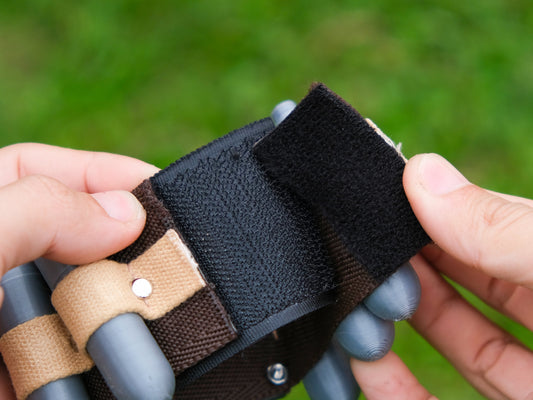
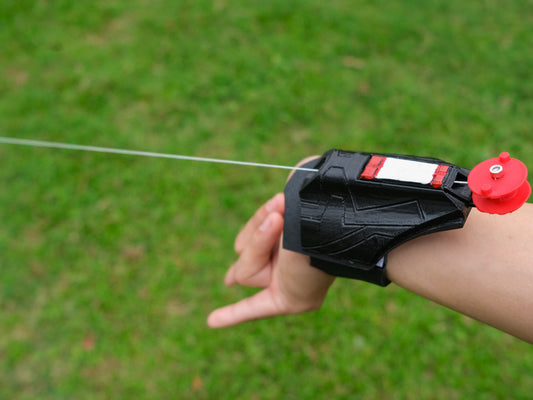
For a visual starting point, explore web shooter props and the 5in1 arc reactor. Use the collection catalog template if the evening inspires you to document the stories behind your own pieces.